
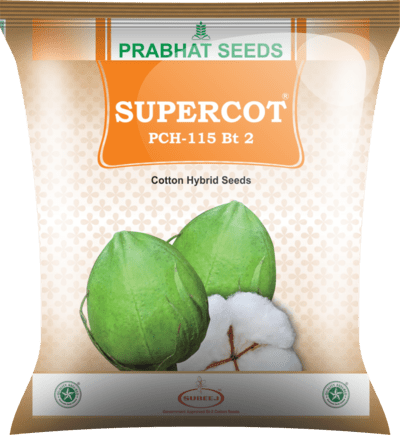
Supercot PCH-115 Bt 2 Cotton Hybrid Seeds
High-yield cotton seeds for enhanced productivity
₹901.00₹850.00
Prabhat Supercot (PCH-115 Bt 2): Robust Performance and High Yield
Prabhat Supercot, technically identified as PCH-115 Bt 2, is a premium cotton hybrid from Prabhat Seeds. It is engineered for farmers who prioritize a balance between aggressive growth and high-quality fiber output. Utilizing Bollgard II (Bt 2) technology, it provides a powerful biological shield against yield-robbing pests.
Key Technical Specifications
Feature | Details |
Hybrid Name | Supercot (PCH-115) |
Technology | Bt 2 (Bollgard II Equivalent) |
Maturity Period | Medium (160–175 days) |
Boll Size | Extra Large |
Plant Habit | Semi-spreading, Vigorous |
Fiber Strength | High Tensile Strength |
Top Performance Features
Aggressive Boll Development: PCH-115 is known for its "super" boll size. The heavy weight of individual bolls contributes significantly to a higher total yield per acre.
Integrated Pest Defense: The Bt 2 technology offers season-long protection against the Bollworm complex, effectively reducing the need for intensive chemical sprays and lowering overall cultivation costs.
Stress Adaptability: This hybrid is particularly well-suited for varying climatic conditions, showing excellent recovery and growth even after periods of intermittent dry spells.
Strong Plant Architecture: The semi-spreading nature of the plant allows for better sunlight penetration and aeration, which helps in reducing the incidence of fungal diseases and ensures uniform boll bursting.
Quality Lint: Produces bright, white lint with a high ginning percentage, making it a favorite for traders and textile manufacturers.
Cultivation Tips for Farmers
Soil Preference: Best suited for deep black to medium loamy soils with good water-holding capacity.
Irrigation Strategy: While it performs well under rainfed conditions, providing 2–3 supplemental irrigations during the flowering and boll-filling stages can significantly boost the harvest.
Management: Responds excellently to "High Density Planting Systems" (HDPS) if managed with proper growth regulators and balanced fertilization.